As Muslim parents, we want our children to grow up confident in who they are, feel proud of their faith, and be able to navigate the modern world without losing their Islamic values.
But confidence doesn’t magically appear when children become teenagers. It begins much earlier.
In fact, modern neuroscience, psychology, and sociology all point to the same conclusion: the beliefs, habits, and identity children develop in their earliest years become the foundation for their future character.
Interestingly, this is something Islam has been teaching for over 1,400 years.
Let’s explore what today’s research reveals, and why giving children strong Islamic roots early may be one of the most important investments a parent can make.
The First Years Shape a Child’s Identity More Than Most Parents Realize
Did you know that by age five, a child’s brain has already developed to approximately 90% of its adult size?
Neuroscientists have found that the early years are a period of extraordinary brain growth. During these years, neural connections are formed at an astonishing rate, creating the foundation for language, emotional regulation, social skills, memory, and lifelong habits.
In simple terms, childhood is when the brain is building its operating system.
What children repeatedly see, hear, feel, and practice during these years becomes deeply embedded. This is why young children effortlessly memorize songs, repeat phrases, and imitate behaviours. Their brains are designed to absorb.
As parents, this raises an important question:
If children are constantly absorbing information, what are they learning about Allah (SWT), Islam, and their identity as Muslims?
Psychology Shows That Identity Starts Earlier Than We Think
Many parents assume that religious identity develops during adolescence. Psychologists disagree.
Research consistently shows that children begin forming their sense of identity and belonging during their early years. By primary school age, children already start answering important questions such as:
- Who am I?
- Where do I belong?
- What do my family and community value?
- What makes me different from others?
Children who develop a clear sense of identity tend to demonstrate greater self-esteem, resilience, and confidence.
When a child understands:
- “I am a Muslim.”
- “Allah (SWT) loves me.”
- “My faith guides me.”
- “I belong to a community.”
– they gain a powerful anchor in an increasingly confusing world. Without this anchor, children often look elsewhere for validation and belonging.
The Digital Age Is Teaching Children Every Day
Whether we intend it or not, someone is always teaching our children.
A child may spend hours each week consuming content from YouTube, games, social media, television, friends, and school environments.
Sociologists often describe this as “socialization”—the process by which children learn values, behaviours, and beliefs from the world around them.
The challenge for Muslim parents today is not that children are learning. The challenge is deciding who is doing the teaching.
If Islamic values are only discussed occasionally, while secular influences are encountered daily, children naturally absorb more of what they experience most often. This is why consistency matters.
Islam cannot become merely a weekend activity. It must become part of everyday life.
The Quran Encourages Parents to Build Faith Early
One of the most powerful parenting examples in the Quran is found in the story of Luqman and his son.
Allah (SWT) says:
“And remember when Luqman said to his son, while advising him: ‘O my dear son! Do not associate anything with Allah (SWT). Indeed, associating others with Him is a great wrong.'” (Quran 31:13)
Notice something beautiful. Luqman doesn’t wait until his son becomes an adult. He begins teaching while his child is still young. He also teaches through conversation, affection, wisdom, and repetition.
“O my dear son…”
This is exactly what modern developmental psychology recommends. Children learn best when they feel emotionally connected to the person teaching them. Love opens the door to learning.
Habits Create Confidence
Confidence isn’t built through motivational speeches. Confidence is built through competence. Children feel confident when they know what to do and have practised doing it.
This applies to sports. It applies to academics. And it applies to Islam.
A child who regularly:
- Says Bismillah before eating
- Makes simple duas
- Learns Quran
- Listens to stories of the Prophets
- Understands Islamic manners
- Prays with their family
begins to feel comfortable being Muslim.
Faith becomes familiar rather than foreign. Natural rather than forced. The Prophet ﷺ understood this principle beautifully. He said:
“Command your children to pray when they are seven years old.”
Notice that he instructed parents to begin training children before prayer becomes obligatory. The goal is to establish a habit before responsibility arrives. Children who grow up practising Islam often carry those habits into adulthood because faith has become part of who they are.
Stories Shape Character
Developmental psychologists have discovered that stories are among the most powerful tools for teaching children values. Why?
Because stories engage both emotion and memory. Children may forget a lecture, but they rarely forget a story.
Allah (SWT) Himself teaches through stories throughout the Quran.
The stories of:
- Prophet Nuh (AS)
- Prophet Ibrahim (AS)
- Prophet Musa (AS)
- Prophet Yusuf (AS)
- Prophet Muhammad ﷺ
are not simply historical accounts.
They are lessons in courage, patience, gratitude, honesty, perseverance, and trust in Allah (SWT). When children repeatedly hear these stories, they begin to internalize these qualities. The heroes they admire become the people they want to emulate.
Why Muslim Parents Need Support Today
Let’s be honest.
Modern parenting is demanding. Parents are balancing work, school schedules, household responsibilities, and countless distractions. Most parents deeply want to teach Islam but struggle with consistency.
Questions often arise:
- What should I teach first?
- How do I keep my child interested?
- How can I make Islamic learning enjoyable?
- How do I teach Islam in an age-appropriate way?
This is exactly where structured Islamic learning can make a meaningful difference.
Helping Children Fall in Love With Islam
At Happy Muslims Boat, we believe children learn best when Islamic education is engaging, interactive, and joyful. The goal is not simply memorization. The goal is to help children build a genuine connection with their faith.
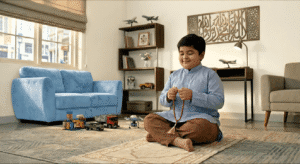
The Pearl Kids Bundle was created with this understanding in mind.
It combines age-appropriate Islamic learning experiences that help children:
- Develop love for Allah (SWT) and His Messenger ﷺ
- Learn Islamic values through engaging activities
- Build positive daily habits
- Strengthen their Islamic identity
- Grow in confidence as young Muslims
Most importantly, it helps parents bring Islam into everyday family life without feeling overwhelmed. Because children learn best when faith becomes part of their daily routine rather than an occasional lesson.
Strong Roots Create Strong Trees
Imagine planting a tree.
You don’t wait until the tree is fully grown to strengthen its roots. You nurture the roots first. Everything else grows from there. Children are no different.
The confidence, resilience, character, and faith we hope to see in our children tomorrow are built through the small, consistent experiences we provide today.
Every Quran story.
Every dua.
Every Islamic lesson.
Every conversation about Allah (SWT).
Every moment spent nurturing faith.
These are not small things. They are roots. And strong Muslim roots often grow into confident Muslim children.
The Best Time Is Now
Childhood passes quickly.
The habits children build today can shape the adults they become tomorrow. Modern research confirms what Islam has always taught: early experiences matter, consistent habits matter, and loving guidance matters.
As parents, we may not be able to control every influence our children encounter. But we can ensure that Islam remains a meaningful, joyful, and consistent part of their everyday lives. And when children grow up knowing who they are, why they believe, and where they belong, they gain something priceless:
A confident Muslim identity rooted in faith, purpose, and love for Allah (SWT).
That journey can begin today.