
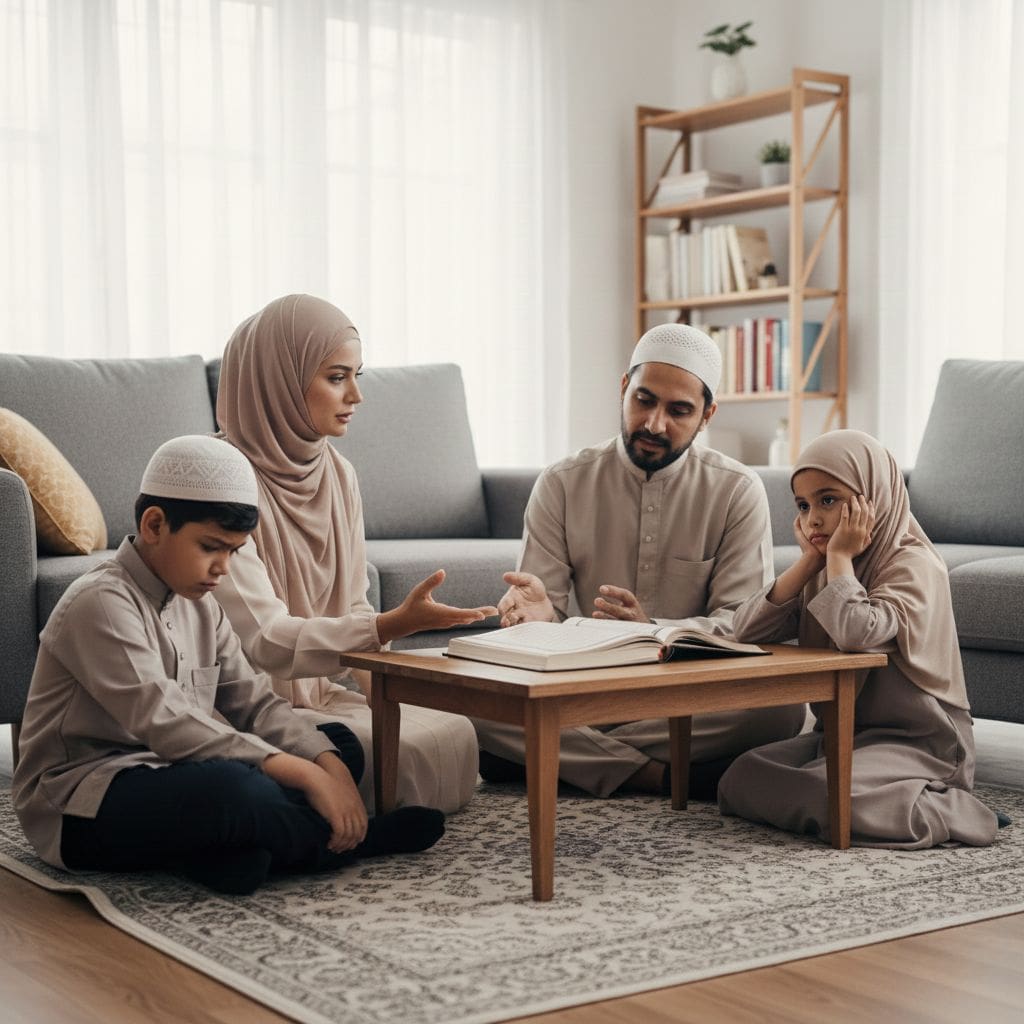
Many Muslim parents share the same concern: “Why doesn’t my child enjoy learning Islam?” Despite good intentions, forcing children to learn deen often leads to resistance rather than love. Research in child psychology and education consistently shows that pressure-based learning reduces long-term engagement, especially in subjects tied to identity and values. When it comes to Islamic education for children, how we teach matters just as much as what we teach.
Why Force-Based Deen Learning Doesn’t Work
Studies in educational psychology reveal that children learn best when they feel autonomy and purpose. According to the American Psychological Association, children who are forced into learning without choice or engagement are significantly more likely to disengage emotionally. This is especially relevant in religious education, where meaning and connection are essential.
In many households, Islamic learning is unstructured, alongside irregular Qur’an lessons, rushed memorization, or correction without explanation. Without a clear system, children feel confused and overwhelmed.
Another key issue is inconsistency. A survey by the Pew Research Center found that over 40% of Muslim parents in Western countries struggle to maintain regular religious instruction at home. Without consistency, children view deen as optional or burdensome rather than a natural part of daily life.
What Actually Works: Structured, Child-Centered Learning
What works instead of force is structured Islamic education for children that is engaging, age-appropriate, and consistent. Children thrive when learning follows a clear path. Programs that offer structured Quran learning for kids and a well-designed Islamic studies curriculum for kids online help children understand why they are learning, not just what they must memorize.
Modern research shows that interactive learning improves retention by up to 60%. That’s why interactive Islamic studies for kids online are becoming increasingly popular. These programs combine storytelling, discussion, visuals, and repetition to keep children engaged.
Parents searching for solutions often turn to online Islamic studies for kids because these platforms offer a professional structure that many parents struggle to provide consistently at home.

The Role of Qualified Teachers and Safe Learning Environments
Children learn better when they trust their teacher. High-quality programs employ qualified Quran teachers and certified Islamic teachers who understand child development. According to education research, students are 3x more likely to enjoy a subject when taught by a trained, supportive instructor.
Parents also prioritize safety. A trusted online Islamic learning platform provides a safe environment where children feel comfortable asking questions and making mistakes – both critical for real learning.
Building Love for Deen, Not Fear
Forcing deen may produce short-term compliance, but it rarely builds long-term commitment. What builds love for Islam is consistency, understanding, and positive experiences. Online Quran classes for kids and child-friendly Islamic studies programs allow children to learn at their own pace while still following a structured system.
The goal isn’t just to raise children who know Islam—it’s to raise children who love it. When deen is taught with structure, care, and connection, children don’t need to be forced. They choose to learn.
Explore our Disney-style Animated Online Islamic Kids Course